Category: Jawless Fish

  • Fossil Evidence of Early Jawless Fish

    Fossil Evidence of Early Jawless Fish

    Jawless fish, belonging to the superclass Agnatha, are among the earliest known vertebrates, with a fossil record that dates back hundreds of millions of years. These primitive creatures provide crucial insights into the early evolution of vertebrates, showcasing the transition from simple to more complex organisms. Fossil evidence of early jawless fish reveals their anatomy, lifestyle, and ecological roles, offering a glimpse into the distant past and the origins of vertebrate life.

    Radencich Salmon Flies and Online Entertainment

    RadencichSalmonFlies.com likely offers information and resources related to salmon flies, possibly for fly fishing. After exploring this niche interest, consider other forms of online entertainment. For a relaxing break, explore gambling360 free casino games.

    The Importance of Jawless Fish in Evolutionary History

    Jawless fish are significant in evolutionary history because they represent the earliest branch of vertebrates. Unlike modern fish, these ancient species lacked jaws and paired fins, characteristics that would later evolve in more advanced vertebrates. The study of jawless fish fossils allows scientists to trace the development of key vertebrate features, such as the vertebral column, skull, and sensory organs. This fossil evidence provides a timeline for the evolution of vertebrates and helps to fill in the gaps in our understanding of how complex life forms developed.

    Cambrian Fossils: The Earliest Jawless Fish

    The earliest known jawless fish fossils date back to the Cambrian period, approximately 520 million years ago. During this time, the first vertebrates began to appear in the fossil record, marking a significant milestone in the history of life on Earth. One of the most notable early jawless fish discovered from this period is Haikouichthys, found in the Chengjiang fossil beds in China. Haikouichthys is considered one of the first true vertebrates, with a simple cartilaginous skeleton, a notochord, and segmented muscles along its body.

    Another important fossil from the Cambrian period is Myllokunmingia, also discovered in the Chengjiang fossil beds. Myllokunmingia shares many characteristics with Haikouichthys, such as a rudimentary skull and gill slits, but also possesses a more developed dorsal fin. These early jawless fish fossils are critical for understanding the initial stages of vertebrate evolution, highlighting the early development of features that would later become more complex in jawed vertebrates.

    Expert Salmon Flies and Fishing Insights

    Radencichsalmonflies.com provides high-quality salmon flies and valuable fishing insights for anglers. For a different kind of thrill, explore the excitement of https://www.kingjohnnie.me/en/online-roulette. Discover the spin and anticipation of the roulette wheel.

    Mastering the Art of Classic Salmon Fly Tying

    At Radencich Salmon Flies, we specialize in the timeless craft of classic Atlantic salmon fly tying, offering a range of resources to help you perfect this intricate art. Our founder, Michael D. Radencich, has been dedicated to this craft since 1990, producing detailed guides and instructional materials :contentReference[oaicite:3]{index=3}. For those seeking a brief diversion between tying sessions, some enthusiasts enjoy light entertainment options like jackpotjillvip Casino Login. We believe in balancing focused craftsmanship with moments of relaxation to maintain a well-rounded perspective.

    Ordovician Fossils: The Diversification of Jawless Fish

    Following the Cambrian period, jawless fish continued to evolve and diversify during the Ordovician period, approximately 485 to 443 million years ago. This period saw the emergence of a wide variety of jawless fish species, some of which developed bony armor and other specialized features. One of the most well-known groups of jawless fish from this time is the Ostracoderms, a diverse group of armored fish that thrived in the shallow seas of the Ordovician.

    Ostracoderm fossils, such as Arandaspis and Astraspis, reveal that these early jawless fish had protective bony plates covering their bodies, likely serving as a defense against predators. The presence of these bony structures marks an important step in vertebrate evolution, leading to the development of the bony skeletons seen in later vertebrates. The fossil record of Ostracoderms provides valuable information on the adaptive strategies that early jawless fish used to survive in their environments.

    Silurian Fossils: The Rise of More Advanced Jawless Fish

    The Silurian period, which occurred around 443 to 419 million years ago, witnessed the continued evolution of jawless fish, with the appearance of more advanced species. During this time, jawless fish began to develop more specialized features, such as improved sensory organs and increased mobility. Fossils from the Silurian period, such as Thelodus and Loganellia, show that these fish had small, tooth-like structures known as denticles, which may have helped them in feeding.

    Thelodont fossils, in particular, provide insight into the diversity of jawless fish during the Silurian period. These small, streamlined fish had scales covering their bodies and are thought to have been efficient swimmers. The fossil evidence from the Silurian period suggests that jawless fish were highly successful in their environments, occupying a range of ecological niches and continuing to evolve new adaptations.

    Explore Online Casino Options

    While you’re here appreciating the artistry and craftsmanship of Radencich Salmon Flies, you might also find interest in discovering online entertainment options. For comprehensive reviews and recommendations on online casinos available to players, you can explore gambling360 casino online. Find reputable platforms offering a wide variety of engaging games and secure entertainment for your leisure time here in Harare on this pleasant Monday afternoon.

    The Decline of Jawless Fish and the Rise of Jawed Vertebrates

    While jawless fish were abundant and diverse during the early Paleozoic era, their numbers began to decline as jawed vertebrates, or gnathostomes, emerged and diversified. The development of jaws provided a significant evolutionary advantage, allowing these new vertebrates to exploit a wider range of food sources and environments. By the end of the Devonian period, many groups of jawless fish had gone extinct, leaving only a few surviving lineages, such as the modern-day hagfish and lampreys.

    Despite their decline, the fossil record of early jawless fish remains a critical resource for understanding vertebrate evolution. The fossils of species like Haikouichthys, Myllokunmingia, and Ostracoderms provide a window into the past, revealing how early vertebrates adapted to their environments and laid the foundation for the evolution of more complex life forms.

    Fossil Evidence of Early Jawless Fish
    Fossil Evidence of Early Jawless Fish

    Conclusion

    In conclusion, the fossil evidence of early jawless fish offers invaluable insights into the origins and evolution of vertebrates. From the earliest Cambrian species like Haikouichthys and Myllokunmingia to the diverse Ostracoderms of the Ordovician and Silurian periods, these fossils trace the evolutionary journey of jawless fish and their contributions to vertebrate history. Although many jawless fish species eventually gave way to the rise of jawed vertebrates, their legacy lives on in the fossil record, providing a deeper understanding of the evolutionary processes that have shaped life on Earth.

  • The Oldest Known Species of Jawless Fish

    The Oldest Known Species of Jawless Fish

    Jawless fish, belonging to the superclass Agnatha, are some of the most ancient vertebrates on Earth. These primitive creatures provide critical insights into the early stages of vertebrate evolution, showcasing the transition from simple to more complex organisms. Among the jawless fish, some species are particularly significant due to their ancient origins, with fossils dating back hundreds of millions of years.

    The Origin of Jawless Fish

    The oldest known jawless fish species appeared during the Cambrian period, over 500 million years ago. These early vertebrates were simple in structure, lacking jaws and paired fins. They possessed a cartilaginous skeleton, a notochord, and gill slits, which are key characteristics of vertebrates. The absence of jaws distinguishes them from later vertebrates, marking a significant evolutionary step towards the development of more complex species.

    Discover Exciting New Casinos

    Just like fly fishing requires precision and timing, finding the best gaming experience demands staying updated with the latest options. Explore the world of new casinos that offer fresh games and innovative features to keep your play exciting. Whether you’re a seasoned player or new to online gaming, these new casinos provide excellent opportunities to test your luck and skills.

    Haikouichthys: The Earliest Vertebrate

    One of the earliest known jawless fish is Haikouichthys, often regarded as one of the first true vertebrates. Discovered in the Chengjiang fossil beds in China, Haikouichthys lived approximately 525 million years ago. It was a small, fish-like creature, measuring only a few centimeters in length. Despite its primitive features, Haikouichthys had a distinct head, a pair of eyes, and segmented muscles along its body, resembling the basic body plan of later vertebrates.

    Haikouichthys’ anatomy includes a rudimentary skull and a simple cartilage-based skeleton, which provided structural support. Its body was covered with a thin, flexible skin, and it lacked the bony armor that would later characterize some jawless fish species. The discovery of Haikouichthys has provided valuable evidence of the early stages of vertebrate evolution, showcasing how these ancient organisms gradually developed more complex features.

    While studying prehistoric aquatic life, we often encounter fascinating evolutionary branches. The jawless fish represent some of Earth’s most ancient vertebrates, predating even bony fish species.

    For those interested in evolutionary biology comparisons, you might want to read the review discussing primitive biological systems. These ancient creatures provide incredible insight into early vertebrate development.

    Their simple yet effective anatomical structures have survived millions of years of environmental changes. Understanding these primordial species helps contextualize modern aquatic biodiversity and adaptation patterns.

    Myllokunmingia: Another Ancient Jawless Fish

    Alongside Haikouichthys, Myllokunmingia is another ancient jawless fish species found in the same fossil beds. Myllokunmingia lived around the same time as Haikouichthys and shares many similar characteristics. It was also small, with a body length of about 2.5 centimeters. Like Haikouichthys, Myllokunmingia had a simple cartilaginous skeleton, gill slits, and a notochord, but it also had a more developed dorsal fin, which may have helped it swim more efficiently.

    The presence of both Haikouichthys and Myllokunmingia in the Cambrian fossil record suggests that the diversification of vertebrates began earlier than previously thought. These species highlight the evolutionary experimentation that occurred during the Cambrian explosion, a period marked by the rapid emergence of various life forms.

    Fishing Adventures and Responsible Leisure

    RadencichSalmonFlies.com offers premium fishing flies and expert tips for anglers seeking the perfect catch. While enjoying time on the water, taking occasional breaks with trusted entertainment platforms like jokacasino Casino Login can provide a fun and safe way to relax. Balancing outdoor adventures with mindful leisure ensures a fulfilling and enjoyable experience.

    The Evolutionary Significance of Jawless Fish

    The study of these ancient jawless fish is crucial for understanding vertebrate evolution. Haikouichthys and Myllokunmingia represent the earliest stages of vertebrate development, displaying the foundational traits that would later evolve into more complex structures in jawed vertebrates. The transition from jawless to jawed fish marks one of the most significant evolutionary advancements, leading to the vast diversity of vertebrate life we see today.

    Moreover, this fish like these early species provide insights into the environmental conditions of the Cambrian period. The presence of these creatures in marine environments indicates the early adaptability of vertebrates to different ecological niches, setting the stage for the evolutionary success of vertebrates in various habitats.

    Jawless fish like lampreys and hagfish are masters of survival, thriving in deep, dark environments that feel alien to us. These ancient creatures navigate a world of immense pressure and mystery, a natural high-stakes game that has played out for millions of years. This is a realm far removed from the artificial worlds humans create for entertainment. The vibrant, flashing lights of a virtual space like a Joka Casino Room stand in stark contrast to the primal darkness where these incredible fish endure. Studying them reminds us of life’s true, long-game of adaptation.

    The Oldest Known Species of Jawless Fish
    The Oldest Known Species of Jawless Fish

    Conclusion

    In conclusion, the oldest known species of jawless fish, such as Haikouichthys and Myllokunmingia, are critical to our understanding of vertebrate evolution. These ancient creatures, with their simple yet distinct features, represent the early steps in the development of vertebrates. Their fossils offer a glimpse into a time when life on Earth was undergoing rapid diversification, leading to the complex ecosystems we know today. By studying these this fish, scientists can continue to unravel the mysteries of early vertebrate evolution and the origins of complex life forms.

  • The Role of Lampreys in Medieval Cuisine

    The Role of Lampreys in Medieval Cuisine

    In medieval Europe, lampreys held a distinctive place in the culinary traditions of the time. These jawless fish, often considered an acquired taste, were a prized delicacy among the nobility and were often served at royal banquets and feasts. The preparation and consumption of lampreys were not just about their flavor but also carried cultural and symbolic significance. This article explores the role of lampreys in medieval cuisine. Hence how they were prepared, and their importance in the social and cultural life of the period.

    Lampreys in Medieval Cuisine
    Lampreys in Medieval Cuisine

    Lampreys as a Delicacy

    Moreover, lampreys were highly valued in medieval cuisine, especially among the upper classes. Their rich, fatty flesh and distinctive taste made them a sought-after dish, often reserved for special occasions. The lamprey’s reputation as a delicacy was such that it was frequently served at the tables of kings and nobles across Europe.

    Moreover, lampreys were particularly popular during Lent and other fasting periods when the consumption of meat was prohibited by the Church. As a fish, lampreys provided a hearty and satisfying alternative to meat, making them a staple in the medieval diet during these times. Therefore, lampreys not only satisfied culinary desires but also adhered to religious dietary restrictions.

    The idea of prized foods being associated with wealth and status also has parallels in modern forms of entertainment, where different casinos can offer varied experiences and promotional choices. Just as medieval hosts used distinctive dishes to create memorable occasions, modern operators often differentiate themselves through game selections, themes, and special offers. However, the reasons for choosing one entertainment option over another can vary considerably between individuals. Exploring these differences provides useful context when examining how leisure activities have evolved across different periods. This comparison also highlights how certain forms of entertainment can reflect changing preferences and social habits.

    Preparation and Recipes

    The preparation of lampreys in medieval times was a complex and labor-intensive process. Due to their slippery, eel-like bodies and the fact that they lack scales, lampreys required careful handling. Cooks would often scald or blanch the fish to remove the slime before cooking. Once cleaned, lampreys were typically prepared in a variety of ways, including baking, roasting, or cooking in rich sauces.

    One of the most famous medieval lamprey dishes was lamprey pie, a savory pie filled with lampreys and a mixture of spices, wine, and other ingredients. This dish was considered a luxurious item and was often served at royal feasts. Additionally, lampreys were sometimes cooked in a sauce made from their own blood. Thus combined with spices and wine, which added to the dish’s rich and unique flavor. To add on, these elaborate recipes underscored the fish’s status as a delicacy and the skill required to prepare them.

    Symbolism and Cultural Significance

    In medieval Europe, lampreys were not just a food item but also carried significant cultural and symbolic meaning. They were often associated with wealth and power, as only the rich could afford to eat them regularly. The serving of lampreys at a feast was a display of status and luxury, symbolizing the host’s wealth and social standing.

    Furthermore, lampreys had a particular association with the English monarchy. King Henry I of England was famously fond of lampreys, and according to legend, he died after consuming a large quantity of them against the advice of his doctors. This event further solidified the lamprey’s place in English cultural history, linking it to the image of indulgence and royal excess.

    In addition to their royal connections, lampreys were also a popular gift among the nobility. It was customary to present lampreys as gifts to kings and queens, especially during the Christmas season. These gifts were often elaborately presented, reinforcing the lamprey’s status as a luxurious and valued commodity. Therefore, the exchange of lampreys was not just about their culinary appeal but also a symbol of goodwill and allegiance.

    Decline in Popularity

    Despite their popularity in medieval times, the consumption of lampreys began to decline in the centuries that followed. Changes in tastes, the availability of other types of fish, and the advent of modern cooking methods led to a gradual decline in the lamprey’s status as a delicacy. Additionally, overfishing and changes in river management contributed to a decrease in lamprey populations. Therefore, making them less accessible and more expensive.

    Today, lampreys are no longer a common feature of European cuisine, although they are still eaten in some regions, particularly in Portugal and Spain, where traditional recipes have been preserved. Thus, while lampreys may no longer hold the same culinary significance they once did, their role in medieval cuisine remains a fascinating chapter in the history of food.

    Conclusion

    In conclusion, lampreys played a unique and important role in medieval cuisine, symbolizing wealth, power, and cultural tradition. Their preparation required skill and care, making them a delicacy enjoyed primarily by the elite. Moreover, their consumption was tied to religious practices and royal customs, further elevating their status in medieval society. Although their popularity has waned over time, the legacy of lampreys in medieval cuisine offers a glimpse into the tastes. As well as traditions, and values of a bygone era.

  • What Are Jawless Fish? Understanding the Basics

    What Are Jawless Fish? Understanding the Basics

    Jawless fish represent one of the most ancient and primitive groups of vertebrates. Unlike most fish, these creatures lack jaws and paired fins, giving them a distinct appearance and set of behaviors. Despite their simple structure, jawless fish have thrived for hundreds of millions of years, adapting to various environments and playing essential roles in marine ecosystems. This article delves into the basics of jawless fish, exploring their unique characteristics, types, and significance.

    Jawless Fish
    Jawless Fish

    Defining Jawless Fish

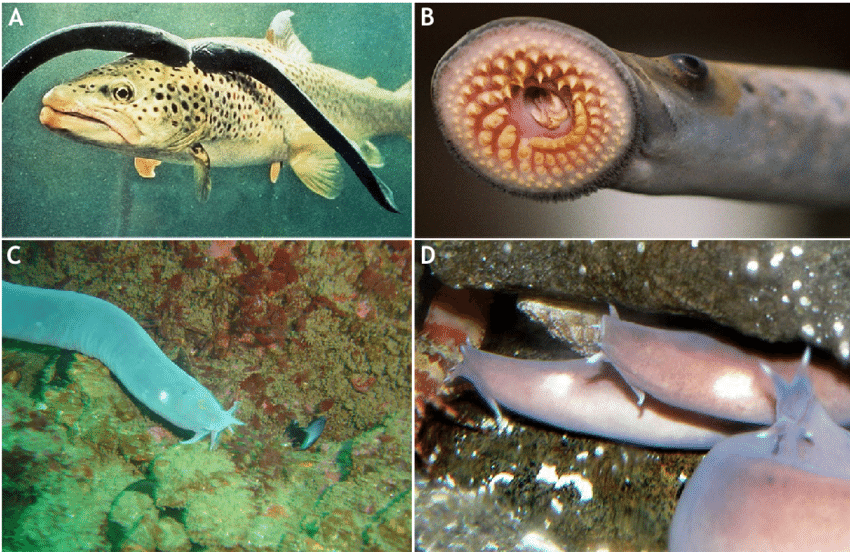
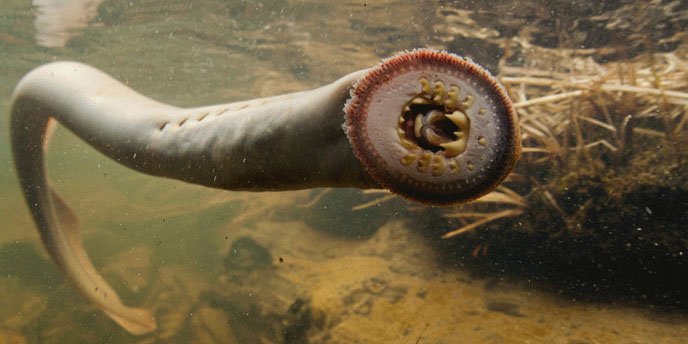
    Jawless fish, scientifically known as Agnatha, belong to a superclass that includes only two existing groups: lampreys and hagfish. These fish are characterized by their lack of true jaws, a feature that sets them apart from the vast majority of vertebrates. Instead of jaws, they have circular, sucker-like mouths filled with rows of teeth or tooth-like structures, which they use to latch onto or feed on other animals.

    Moreover, jawless fish lack paired fins, a backbone, and scales, which are common features in most other fish species. Their bodies are elongated and eel-like, with soft, flexible skin that often produces copious amounts of slime. Despite their primitive features, jawless fish have successfully adapted to various habitats, from deep ocean floors to freshwater rivers.

    Experience Premium Fly Fishing Adventures

    Radencich Salmonflies offers enthusiasts the finest selection of flies and expert advice for a successful fishing season. Our commitment to quality ensures that every angler enjoys an exceptional outdoor experience. Alongside planning your perfect fishing trip, you can also explore engaging entertainment like Kingjohnnie Casino Room. Discover the best of recreation both on the water and online.

    The Two Main Types of Jawless Fish

    Lampreys

    Lampreys are perhaps the most well-known group of jawless fish. They have a parasitic lifestyle, often attaching themselves to other fish with their suction-cup-like mouths. Once attached, lampreys use their sharp teeth to scrape away the host’s skin and feed on its blood and bodily fluids. This parasitic behavior can be harmful to the host fish, leading to significant declines in fish populations in areas where lampreys are invasive.

    Furthermore, lampreys are anadromous, meaning they spend part of their lives in the ocean and return to freshwater rivers to spawn. Their life cycle involves a lengthy larval stage, during which they burrow into riverbeds and filter-feed on microscopic organisms. Hence, lampreys play a dual role in the ecosystem: as parasites and as filter feeders during their larval stage.

    Hagfish

    Hagfish, often referred to as “slime eels,” are another group of jawless fish known for their unique defense mechanism. When threatened, hagfish can produce large quantities of slime, which can clog the gills of predators or allow them to slip away. This slime is so effective that it has garnered interest from scientists and engineers for potential applications.

    In addition to their slime production, hagfish have a scavenging lifestyle, feeding primarily on dead or dying animals. They use their tooth-like structures to rasp away flesh, often burrowing into the carcasses of larger animals to consume them from the inside out. Therefore, hagfish play a crucial role in the marine ecosystem by breaking down and recycling nutrients from dead organisms.

    The Evolutionary Significance of Jawless Fish

    Jawless fish hold a significant place in the evolutionary history of vertebrates. They are among the earliest vertebrates, with fossil records dating back over 500 million years to the Cambrian period. The lack of jaws in these fish represents a primitive stage in vertebrate evolution, preceding the development of more complex structures like jaws and paired fins.

    Furthermore, the study of jawless fish provides valuable insights into the evolution of vertebrates. By examining the biology and genetics of lampreys and hagfish, scientists can better understand how early vertebrates evolved and adapted to their environments. Thus, jawless fish are not only fascinating in their own right but also essential to understanding the broader evolutionary history of life on Earth.

    The Ecological Role of Jawless Fish

    Despite their primitive appearance, jawless fish play vital roles in marine and freshwater ecosystems. Lampreys, as parasites, help control fish populations and maintain ecological balance. In areas where they are invasive, however, they can cause significant ecological and economic damage, highlighting the complexity of their role in the ecosystem.

    Hagfish, on the other hand, are important scavengers, cleaning up dead and decaying matter from the ocean floor. By consuming carrion, they recycle nutrients and help maintain the health of the marine environment. Additionally, their slime production contributes to the unique dynamics of predator-prey interactions in the ocean.

    Understanding the Basics of Jawless Fish

    Jawless fish are among the most ancient vertebrates, characterized by their lack of jaws and unique biological features. Studying these fascinating creatures helps scientists learn more about the evolution of aquatic life. After diving into marine biology, some enthusiasts enjoy relaxing with games like jokacasino online blackjack for a fun and engaging break. Combining education with entertainment offers a well-rounded experience.

    Take a Relaxing Break with StellarSpins Casino Login

    RadencichSalmonFlies.com focuses on fly fishing and outdoor adventures while highlighting the importance of balancing time spent on hobbies with moments of relaxation. For a fun and engaging pause, stellarspins Casino Login offers entertaining games to refresh your mind.

    Conclusion

    In conclusion, Jawless fish, with their unique characteristics and ancient lineage, offer a glimpse into the early stages of vertebrate evolution. Lampreys and hagfish, the two main types of jawless fish, have adapted to diverse environments and play important roles in marine and freshwater ecosystems. Moreover, their evolutionary significance and ecological contributions make them a fascinating subject of study for scientists and nature enthusiasts alike. As we continue to explore the depths of our oceans and rivers, jawless fish remind us of the incredible diversity and adaptability of life on Earth.